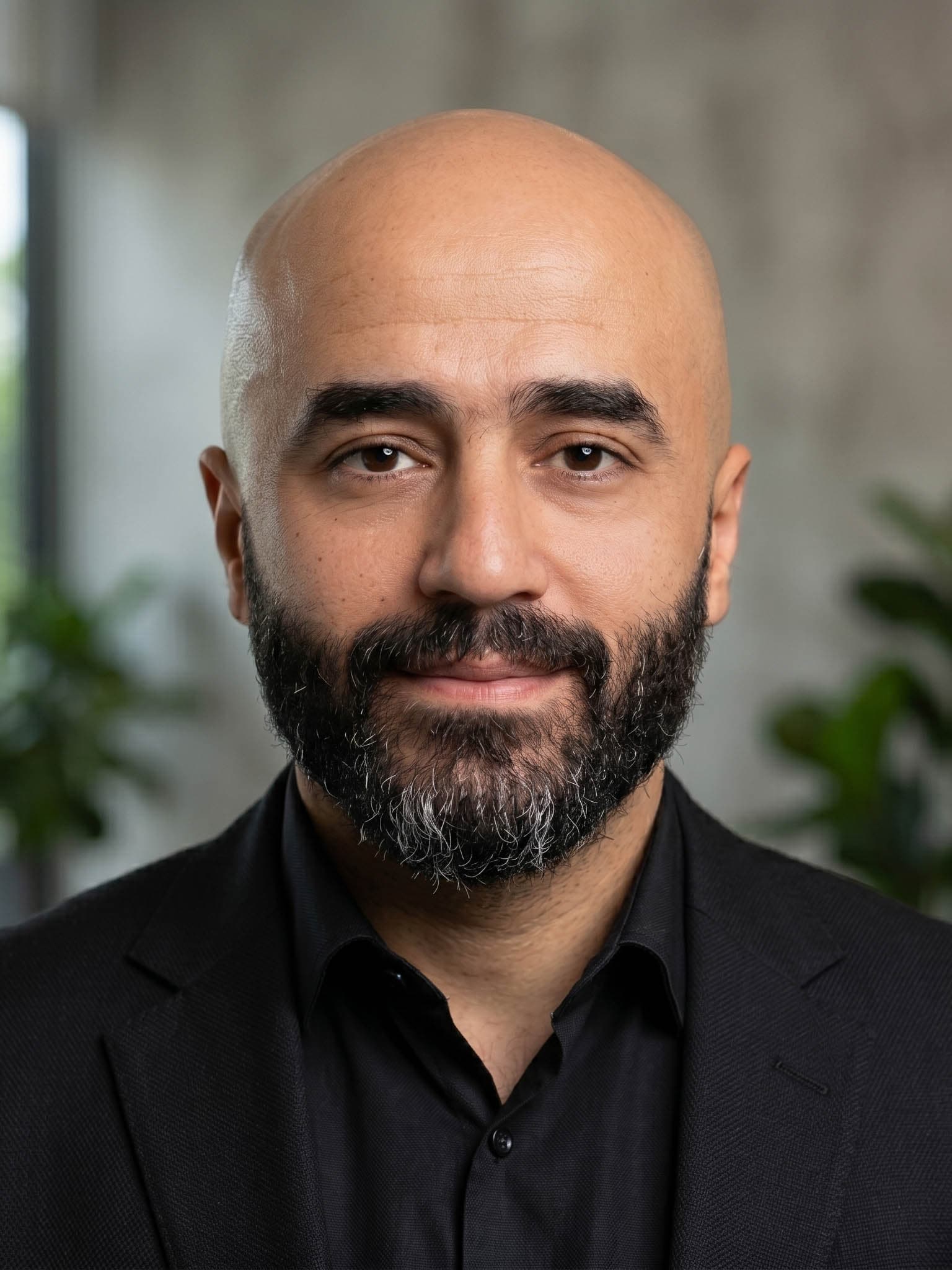
For thirty years I lived inside the martial, wellness, and somatic arts. After master's studies in China I came home to Egypt and opened a small academy — Dragon Academy — where people came to train the body and, without quite naming it, to find their way back to themselves. I watched them change: steadier relationships, clearer minds, a sense of purpose they hadn't arrived with. It was the most fulfilling work I knew.
Then my wife was expecting our daughter, and the work that filled me was also swallowing my hours. One honest question stopped me: had I chosen to have a family so that others would enjoy my children in my place? We moved to Canada.
I stayed in touch with my students from afar, and watched something that hurt: one by one, they slipped back. The balance faded, the practice stopped, the clarity dimmed. I kept asking myself — what did I do wrong? It cut deep enough to shake my sense of why I did any of this.
When I finally understood, it moved me to the core. I had taught the way I was taught — the slow Eastern way, technique perfected over years, fit for a master whose whole life is the practice. My students had other lives. What had kept them going wasn't something inside them; it was two things outside them: a safe community, and a teacher who kept their fire lit. Take those away, and ordinary life rushed back in.
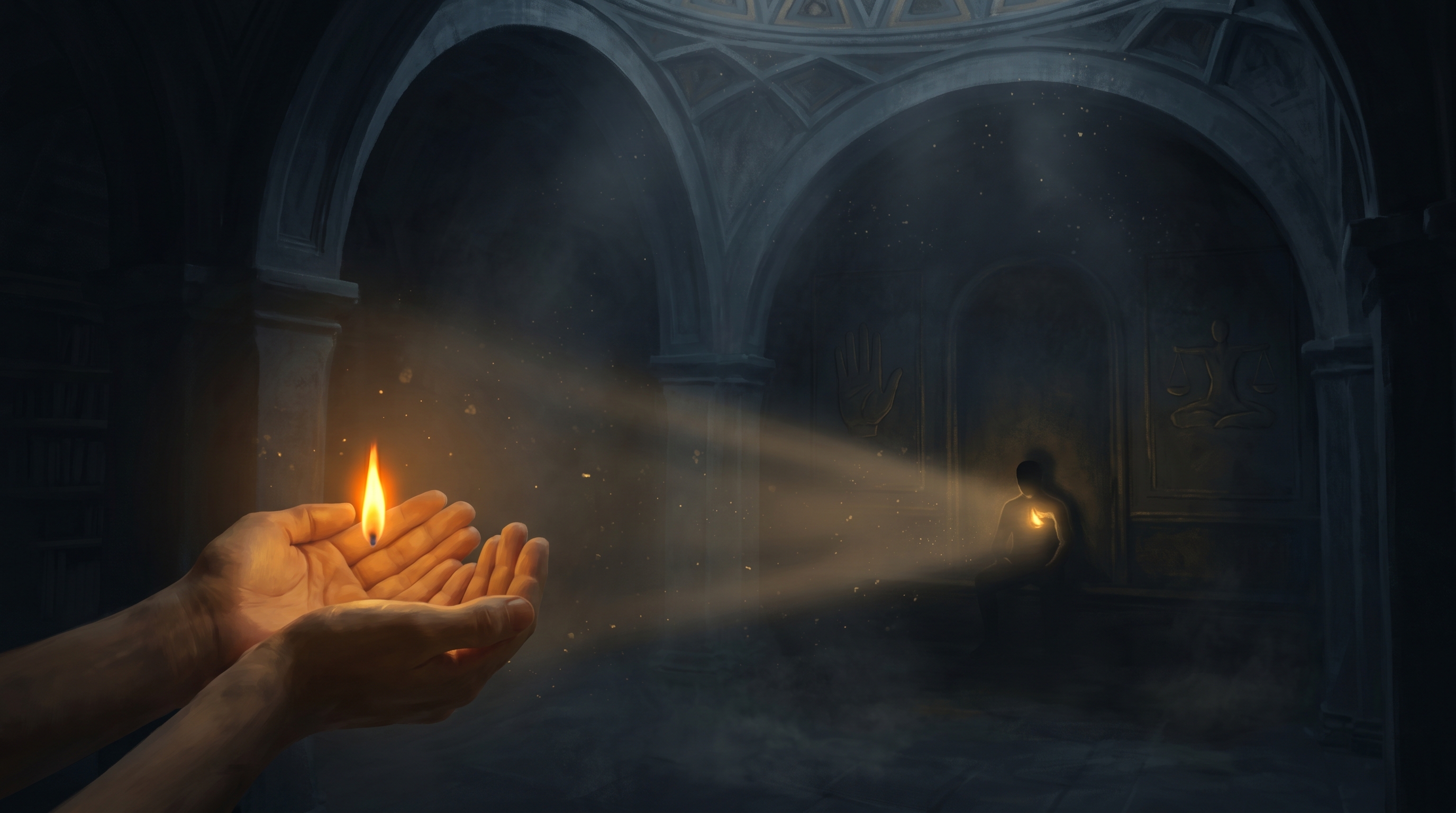
That was the gift hidden in the pain. I realized I did not want to be the source of anyone's motivation — handing out a fuel that ran dry the moment I left the room. I wanted to be a companion: someone who walks beside people while they learn to draw their motivation from within.
Almost as soon as I named that, it found me. A friend and client, Pamela Pritchard, told me that the thing I was describing already had a name in the West — professional coaching. It took me seconds to say yes. The path seemed to have a life of its own — and I felt carried, guided by God, to where I needed to be.
But as I trained, I sensed a gap. Western coaching was strong on goals, on thinking, on the shape of behavior; the Eastern practices I came from treated awareness as the destination itself, worked through the body, and met each person as singular rather than a type. I trained again, in the US, to be sure it wasn't just one school. The gap was real — and I was too new to Western coaching, and too fond of the East, to bridge it honestly. So I held the question open and let it work on me.
After years of practising in both worlds, I found the one capacity that closes the gap: presence. The West names it — Silsbee, Hunt, and Divine all circle it; the East has lived inside it for thousands of years. And here is what struck me: presence is not rare, and it is not reserved for a few. It is innate — already in us, only forgotten, tucked in a dark corner of the self, waiting for a little light. When it returns, it becomes the place where mind and body, inner world and outer world, finally speak to each other — and every experience turns into something you can learn and grow from.
And that raised the question that became my life's work: How can I create space for people to experience presence — by design?
The answer is Somatic Thinking. I drew on thirty years in the martial, wellness, and somatic arts and fifteen years of coaching across four continents and three languages, and built what I think of as a shortcut to presence — a philosophy, and a method, for living life in partnership with the body until presence becomes your ordinary way of being. That is where it began. The rest of this series is what it became.
When you're ready, the door is open.
Where to next?
- Read on: The Butterfly Experience →
- Experience it: book a session →
- Become the coach: Somatic Thinking Coaching Education (STCE) →
Somatic Thinking was created by Samer Hassan and first set down in Coaching Presence (Dr. Tünde Erdős, Open University Press / McGraw-Hill, 2021) — a book built on Dr. Erdős's pioneering doctoral research into coaching presence.